THE LUCKY BUTT BLOG ·
Caffeine-Free Non-Alcoholic Drinks in Canada: What to Try (and What to Check)
Looking for caffeine-free non-alcoholic drinks in Canada? Discover grown-up options, spot hidden caffeine on labels, and find something you'll actually enjoy.
By Lucky Butt
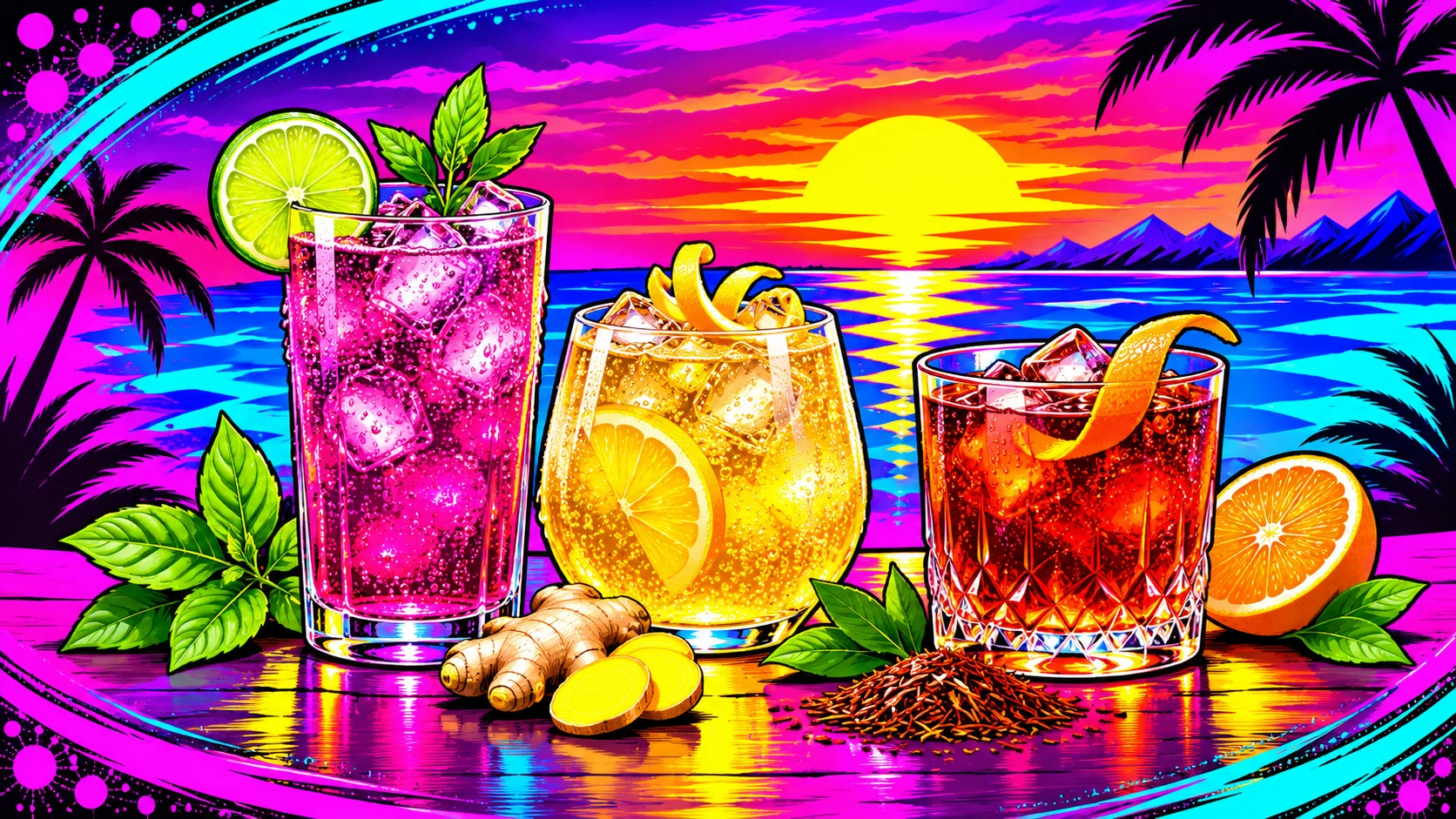
So you've decided to skip alcohol. Maybe caffeine too.
Excellent. Two perfectly reasonable decisions.
Unfortunately, the beverage industry apparently thinks your options should now be water, more water, or a $14 mocktail that tastes like somebody dissolved a bag of gummy bears.
Here's the good news: there are plenty of caffeine-free non-alcoholic drinks for adults in Canada, including sparkling drinks, herbal infusions, alcohol-free beer, and botanical beverages.
The trick is knowing what actually contains caffeine, what doesn't, and what you might genuinely enjoy drinking.
Because avoiding alcohol shouldn't mean giving up flavour, personality, or your favourite glass.
Non-Alcoholic Doesn't Automatically Mean Caffeine-Free
Let's clear up the biggest misconception first.
A drink can be completely alcohol-free and still contain caffeine.
Think about espresso mocktails, iced tea, cola, matcha drinks, or alcohol-free beverages containing guarana or yerba mate.
Not a drop of booze. Potentially plenty of caffeine.
According to Health Canada, caffeine occurs naturally in coffee, tea, chocolate, guarana, kola and yerba mate.
And some beverages contain added caffeine.
So if you're shopping for a drink without either ingredient, checking the alcohol content is only half the job.
Which Non-Alcoholic Drinks Are Caffeine-Free?
Here's a useful starting point.
| Drink type | Caffeine considerations |
|---|---|
| Plain sparkling water | Generally caffeine-free unless caffeine is added |
| Rooibos tea | Naturally caffeine-free when made from rooibos alone |
| Fruit-and-herb infused water | Typically caffeine-free when made without caffeinated ingredients |
| Caffeine-free soft drinks | Look for a clear caffeine-free label |
| Non-alcoholic beer | Typically made without caffeinated ingredients, but check the product |
| Botanical drink mixes | Depends on the specific botanical ingredients |
| Decaffeinated coffee | Usually contains a small amount of caffeine |
| Alcohol-free energy drinks | May contain significant caffeine |
That last distinction matters.
Decaffeinated isn't necessarily the same as caffeine-free.
Health Canada's reference values list an average of approximately 3 mg of caffeine in a 237 mL serving of decaffeinated brewed coffee. Regular brewed coffee contains considerably more.
If you're simply reducing caffeine, decaf might suit you. If you need to avoid it strictly, read the product information more carefully.
Why Some Alcohol-Free Drinks Still Feel Like the Wrong Choice
Imagine it's Friday evening.
Your friends are having beers. Someone offers you an energy drink.
Technically, you've solved the alcohol problem.
But did you actually want an energy drink at 9 p.m.?
Probably not.
A surprising number of alcohol alternatives focus on recreating the taste of alcoholic drinks or delivering some kind of functional experience.
There's nothing inherently wrong with either approach.
But sometimes you just want a drink that tastes interesting.
No booze. No coffee. No unnecessary performance promises.
And preferably no fluorescent liquid that makes your tongue look like a highlighter.
Three Ways to Make an Alcohol-Free Drink More Interesting
You don't need a cocktail shaker or an entire cupboard dedicated to syrups.
Instead, think about what makes a drink enjoyable.
1. Give it some bite
Sweetness isn't the only way to add flavour.
Try sparkling water with a strip of orange peel and a little fresh ginger. Or experiment with mint, lemon, and a pinch of finely grated citrus zest.
Aromatic ingredients can make a drink more interesting without adding coffee, tea or conventional caffeine sources.
Start small. You can always add more flavour.
Removing half a teaspoon of black pepper from an overly ambitious drink is considerably harder.
2. Try something earthy instead of fruity
Not every adult beverage needs to taste like a tropical vacation.
Rooibos, suitable herbal infusions and plant-based mixers can have earthy, woody, spicy or botanical flavour profiles.
They offer a completely different direction from sweet canned mocktails.
Just remember that herbal doesn't automatically mean caffeine-free. Some blends contain tea, yerba mate or other caffeine sources.
Read the ingredients rather than trusting the picture of a leaf on the package.
3. Choose something you can customize
One underrated advantage of making your own drink is controlling what goes into it.
You might like a sharper drink with lemon. Someone else prefers something mild. Another person wants sparkling water instead of still.
Using simple mixers or single-serve drink packets lets people prepare individual servings rather than committing everyone to the same pitcher.
That can make casual entertaining much easier.
And if you want more mixing ideas, we've already covered seven things to mix with botanical drink powder.
What About Caffeine-Free Botanical Drinks?
Botanical drinks deserve a closer look because the category can be confusing.
Botanical simply refers to plant-derived ingredients. It doesn't automatically mean alcohol-free, caffeine-free, calming or suitable for everyone.
Some formulations contain green tea, guarana or other caffeine sources. Others use roots, seeds, leaves and berries that aren't conventional sources of caffeine.
One example worth exploring is Lucky Butt, an Ontario-based non-alcoholic powdered drink mix.
It's made with hemp, ginseng, schisandra, moringa and ginger. The published ingredient list doesn't include coffee, tea, guarana or other conventional caffeine ingredients.
The flavour is earthy, herbal and a little zingy. Instead of trying to imitate beer or wine, it does its own weird little thing.
Lucky Butt comes in individual packets you can mix into water or sparkling water. The current 10-pack costs $20 CAD, or $2 per packet before any applicable shipping or taxes, with delivery available within Ontario.
If you're curious about a portable botanical alternative, explore the Lucky Butt 10-pack.
An important distinction: a botanical ingredient list isn't a laboratory test confirming a zero-caffeine level, and botanical ingredients can have their own effects or interactions. Check with the manufacturer if strict caffeine avoidance matters, and consult a healthcare professional about ingredient suitability if you're pregnant, breastfeeding, taking medication or managing a health condition.
How to Check a Drink Label Without Becoming a Food Scientist
Before buying an unfamiliar alcohol-free drink, run through three questions.
First: Does it contain alcohol?
Look for the declared alcohol percentage and the ingredients. Some products marketed as alcohol alternatives contain residual alcohol.
If you require complete avoidance, don't assume every product in the non-alcoholic aisle is identical.
Second: Does it contain caffeine?
Watch for coffee, espresso, black tea, green tea, matcha, guarana, yerba mate and added caffeine.
Even an apparently innocent chocolate-flavoured drink may contain some caffeine.
Third: What else is in it?
Check sweeteners, botanical ingredients, recommended serving sizes and any caution statements relevant to you.
The Canadian Food Inspection Agency explains that food-label claims must be truthful and not misleading.
In other words, "natural," "botanical," and "functional" aren't magic words that tell you everything about a drink.
Neither is a psychedelic-looking label.
And we're allowed to say that. Have you seen ours?
What Should You Drink Instead of Alcohol at Night?
Start with the experience you're actually looking for.
If you want bubbles, choose a suitable caffeine-free sparkling drink.
If you prefer something warm, explore caffeine-free infusions or a simple ginger-and-lemon drink.
If you enjoy beer, compare non-alcoholic beers and check their labels.
And if your usual choices are starting to feel painfully predictable, consider an unfamiliar botanical flavour.
There's no requirement to drink the same thing every evening.
There's also no requirement to turn your beverage choice into a complete lifestyle overhaul.
For a broader selection, check out our guide to what to drink instead of alcohol after work.
Frequently Asked Questions
Are all non-alcoholic drinks caffeine-free?
No. Non-alcoholic beverages can contain caffeine from coffee, tea, guarana, yerba mate or other ingredients. Check the label.
Does ginseng contain caffeine?
Ginseng root is not a conventional natural source of caffeine. However, products containing ginseng can also include caffeine from other ingredients. And caffeine-free doesn't necessarily mean a botanical product has no physiological effects.
Is decaf coffee completely caffeine-free?
Not necessarily. Decaffeinated coffee generally retains a small amount of caffeine. Health Canada provides average caffeine amounts for different types of coffee and tea.
Can a drink be caffeine-free but still contain sugar?
Absolutely. Caffeine and sugar are separate ingredients. A caffeine-free soda may still be sweetened, and an unsweetened drink may still contain caffeine.
Always check both if they matter to you.
Your Drink Doesn't Need to Do Everything
Here's a thought.
Maybe your drink doesn't need to improve your productivity, transform your mood, optimize your evening or make you feel like you've unlocked a secret level of human existence.
Maybe it just needs to taste good.
You can skip alcohol, skip caffeine, experiment with new flavours, and still enjoy the simple pleasure of having something interesting in your glass.
No elaborate performance claims necessary.
No cocktail-making certification required.
And absolutely no obligation to drink another overpriced glass of glorified fruit punch.
FEEL THE MAGIC. SKIP THE BOOZE.